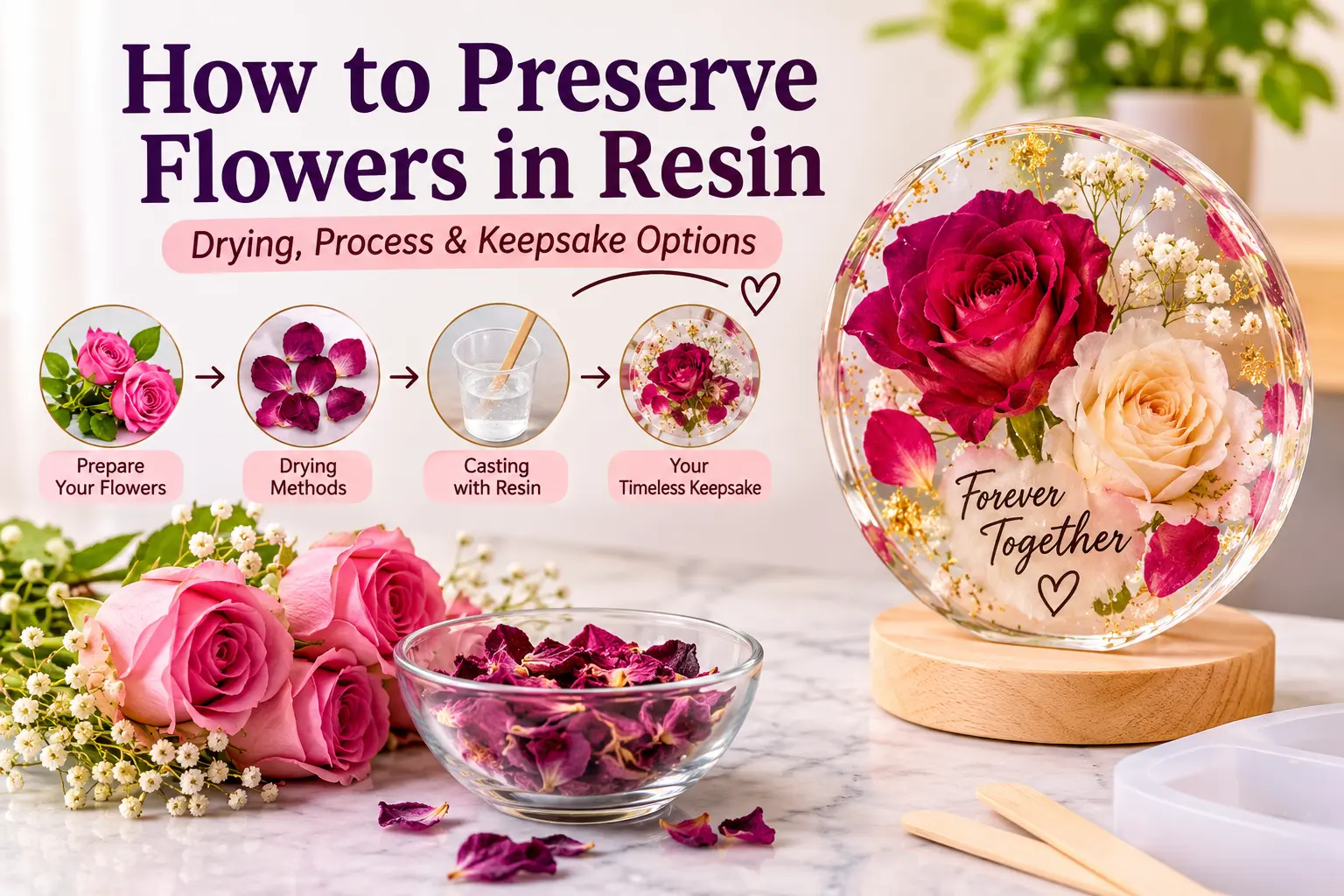
How to Preserve Flowers in Resin: Drying, Process & Keepsake Options
To preserve flowers in resin, the flowers need appropriate drying and preparation before casting. Putting a fresh bouquet directly into resin is not a reliable way to keep it: moisture can affect the result and the flowers may deteriorate. The right approach depends on the flowers, their condition, the shape you want to retain, and the resin system used.
If your flowers are from a wedding or another important occasion, begin by considering the keepsake you want rather than experimenting on the original blooms. Pravi Creation’s custom resin art gifts and personalized keepsakes include flower preservation options that can be discussed after an assessment. This guide explains the main preparation choices, the broad process, and what to ask before you send sentimental flowers to a maker.
Decide What You Want to Preserve
A bouquet or varmala may contain more flowers than one display piece can hold. Decide whether your priority is a particular bloom, the color combination, or a selection that represents the whole arrangement. A small number of meaningful flowers may communicate the memory more clearly than trying to fit every stem into a limited space.
The intended keepsake also matters. A flatter design and a deeper piece do not require the same flower shape. Text, a photograph, and other details take up space too. Explore our personalized resin keepsake collection if you are comparing formats, then discuss which arrangement can work with the actual flowers you have.
Take photographs of the original flowers before they change or are separated. Keep an image of the whole bouquet and closer pictures of the blooms you care about most. These photographs help explain the memory and provide a reference for a design discussion. They cannot guarantee a result, but they make your priorities easier to understand.
Why Flowers Need to Be Dried First
Fresh flowers contain moisture. Resin casting requires a suitable prepared inclusion, so the flowers need to be properly dried before they are used. Covering them in resin does not replace this preparation. Moisture can contribute to cloudiness, bubbles, and deterioration, and a flower may look dry on the outside while still holding moisture within it.
For sentimental flowers, contact a maker early and explain whether they are fresh, partially dried, or already dried. Ask how they should be handled for that particular order. Avoid trying a new preparation method on the flowers you most want to keep without understanding its effect on their shape and appearance.
Our resin gifts for special occasions can help you think about the final display, but flower condition comes first. A design reference should guide the conversation rather than create a promise that every flower can be prepared to look exactly like the example.
Common Flower-Drying Approaches
Pressing for a Flatter Arrangement
Pressing dries flowers while flattening them, making it a consideration for designs that use a flatter botanical arrangement. It changes the shape, so it is not the right choice when your priority is retaining the rounded form of a full flower head. The flower’s thickness and structure affect how it responds.
Before selecting pressing, look at the keepsake format and decide whether a flat flower suits the memory. A pressed arrangement can communicate a different look from a dimensional bouquet. If a maker will complete the preservation, discuss this choice with them before pressing the flowers yourself.
Silica Gel for More Dimensional Flowers
Silica gel drying is commonly used when retaining more of a flower’s shape matters. The material absorbs moisture around the bloom, but handling needs care so delicate petals are not damaged. Flower type, density, and condition can affect the preparation and outcome.
This approach is not a universal guarantee of unchanged color or perfect shape. Follow the drying product’s instructions and the maker’s requirements rather than copying a fixed time from an unrelated tutorial. If you are preserving valuable wedding flowers professionally, ask whether drying is included before attempting it yourself.
Air Drying Where the Flower and Design Allow
Air drying may suit some flowers and arrangements, but it can change shape and color and may not give the result needed for a particular resin design. It should be considered in relation to the bloom and the final piece, not simply because it uses fewer materials.
There is no single drying method that makes every flower suitable for every keepsake. A useful flower preservation preparation guide can explain the choices, while your own flowers still need assessment. If several methods seem possible, prioritize the desired shape and the needs of the selected resin format.
How Long Does Drying Take?
Drying time varies with the method, flower structure, starting moisture, and surrounding conditions. A thick flower head does not behave like a thin petal. A fixed number of days from a tutorial should not be treated as proof that your particular flowers are ready for casting.
The goal is appropriate dryness throughout the material, without avoidable damage. For a professionally made keepsake, ask how the flowers will be assessed and prepared. If you are testing a DIY project, use non-sentimental flowers first and follow the drying product’s instructions. Do not rely only on the outside of the bloom feeling dry.
The Broad Resin Preservation Process
1. Assess and Prepare the Flowers
Begin by checking the flowers’ condition and selecting the blooms or petals needed for the design. The chosen drying method should suit their structure and the intended arrangement. Damaged or deteriorating material may limit what can be achieved, so the assessment belongs before a final promise about the keepsake.
Once prepared, the flowers need careful handling to avoid crushing delicate parts or exposing them unnecessarily to moisture. If a professional maker is doing this work, follow their instructions instead of adding oils, sprays, or coatings on your own. Any treatment needs to be compatible with the chosen process.
2. Plan the Layout Before Casting
Decide where the flowers, names, date, and any photograph will sit. Confirm which details are essential and which are optional. Allow enough space for the flowers to be recognizable and the text to remain readable. A large bouquet may need a selected arrangement rather than a miniature version of every original stem.
For a memory that centers on a photograph, compare customized resin photo frames with a flower-led piece. The best format is the one that communicates your main memory clearly. Ask whether the available product can suit the flowers before settling on a reference image’s exact shape or dimensions.
3. Use a Suitable Resin System and Its Instructions
Casting resins differ in their mixing requirements, permitted pour depth, working time, and curing conditions. The broad steps in a guide cannot replace the instructions for the actual product. Use a resin system appropriate for the intended piece and follow its technical and safety guidance, including ventilation and protective equipment requirements.
Avoid treating one brand’s mixing ratio or cure time as a general rule for all resin. The flowers also need to be compatible with the process. If you are learning, practice with ordinary materials and a small test design before attempting a larger or irreplaceable inclusion. For wedding keepsakes, professional assessment may be the more practical starting point.
4. Complete, Cure, and Finish the Piece
Casting may involve stages depending on the resin and design. After casting, the piece needs the curing and finishing appropriate to that system before it is handled, packaged, or displayed. The process is more than pouring resin over flowers and removing the piece when it looks firm.
Ask the maker about the full schedule, including flower preparation, production, finishing, and delivery. If you need the keepsake for a specific occasion, disclose the date during the first inquiry. A production estimate should be tied to the actual design and material rather than assumed from a tutorial’s demonstration.
What Can Change During Preservation?
Natural flowers may look different after preparation. Colors can shift, petals can become more delicate, and the original fullness may change. Different flowers from the same bouquet can respond differently. Resin does not make a damaged bloom look newly picked, so the starting condition matters.
Long-term display also affects appearance. Keep the finished keepsake away from prolonged direct sunlight and strong heat, and follow its care instructions. Avoid promises that the flower color will never change. A realistic goal is a meaningful keepsake made from suitable prepared flowers, with expectations discussed before the order.
If you are arranging a gift, our resin gift ideas for weddings and anniversaries can help you decide whether preserved flowers, a photograph, or a decorative piece best fits the recipient. The sentimental value comes from the choice of memory, even when the preserved flowers differ from their fresh appearance.
Before Sending Wedding Flowers to a Maker
Contact the maker and share the occasion date, current flower photographs, storage history, and preferred keepsake idea. Mention whether the flowers have already been dried or treated. Ask if the order can be accepted and what handling and shipping instructions apply before dispatching them.
Confirm what the service includes, how the design will be agreed, what quantity of flowers is needed, and whether unused flowers can be returned. Also discuss the quote, deadline, destination, and delivery arrangements. These questions establish the order clearly without assuming a policy that has not been confirmed.
For a Pravi Creation order, begin with our resin flower preservation service and send your current flower photographs. Keep a record of the flowers you plan to send and identify the ones that matter most. Wait for instructions for your particular order before packing or posting sentimental material.
Frequently Asked Questions
Can Fresh Flowers Be Preserved Directly in Resin?
Fresh flowers need preparation and drying before resin casting. Their moisture can affect the result. Discuss the correct handling for the flowers and resin process instead of pouring resin directly over a fresh bouquet.
Is Pressing or Silica Gel Better for Flowers?
The choice depends on the flower and desired shape. Pressing creates a flatter arrangement, while silica gel is often considered for more dimensional blooms. Discuss the final keepsake format before choosing a method.
Can I Preserve a Whole Wedding Bouquet or Varmala?
Share photographs and ask about the suitable format. A display piece may use selected flowers rather than the entire arrangement. The flowers’ condition, size, and design determine what can be included.
Will Preserved Flowers Always Keep Their Original Color?
Exact, permanent color retention should not be assumed. Flowers can change during preparation and with age or light exposure. Ask about the likely appearance of your flowers and follow the finished piece’s display instructions.
Plan the Keepsake Before Working on the Flowers
Choose the memory and display format first, then discuss how the flowers should be prepared. If they are irreplaceable, an early assessment is more useful than experimenting on them. Message Pravi Creation on WhatsApp at +91 97731 66242 with current flower photographs, the occasion date, and your preferred keepsake. Visit Pravi Creation for our business details and to start the conversation.